


Waste and circularity
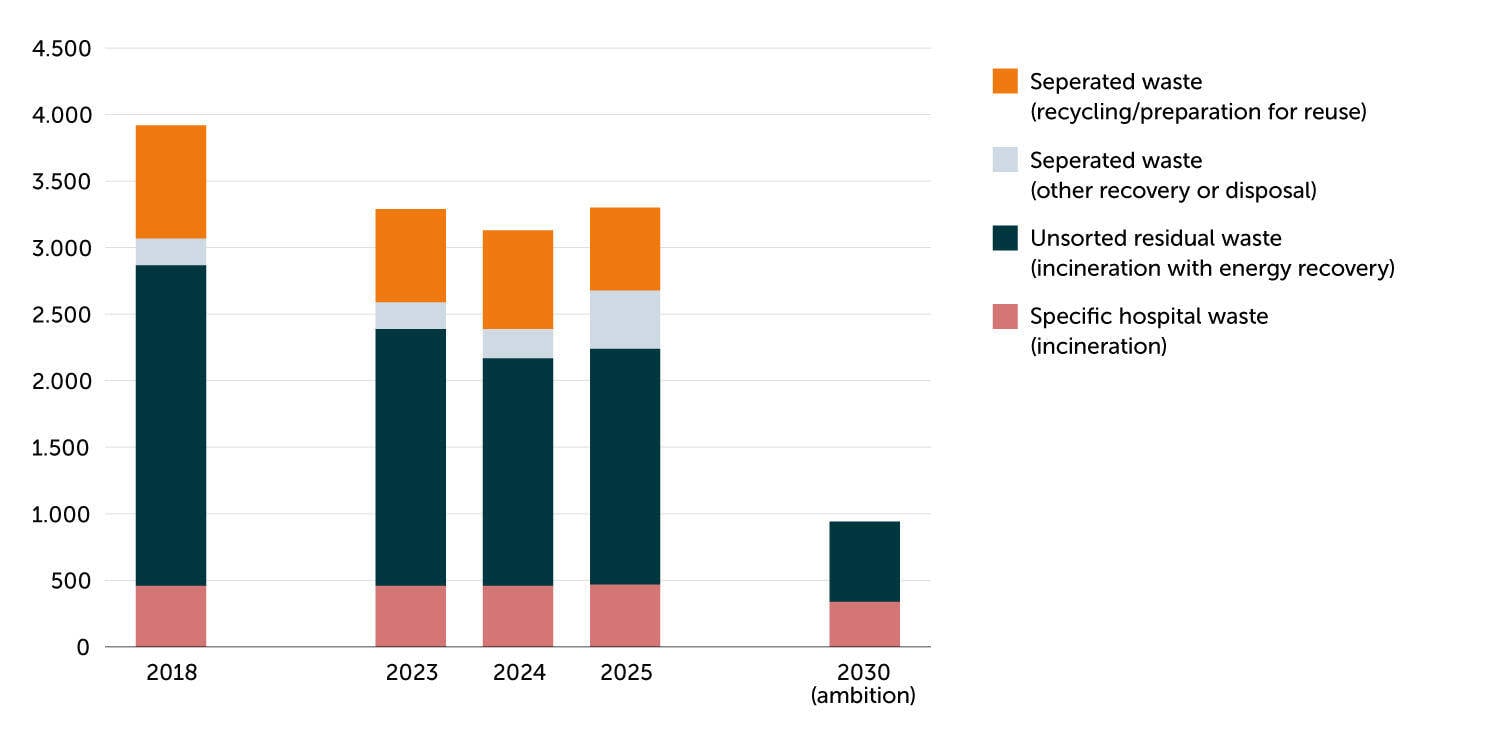
We are working towards becoming a fully circular organisation by 2050, with 75% less residual waste by 2030 compared with 2018 (see image below). The Circularity road map was completed in 2025 and will be published in 2026. That road map includes more than 30 projects, such ones involving reducing the use of non-sterile gloves and reuse of operating theatre clothing sets, all being consistent steps in the move towards circularity. We have also installed 440 new waste separation units; in time, this will help to increase our recycling rate.
Amsterdam UMC made great strides in making its environmental sustainability ambitions a reality in 2025. For instance, we now have a clearer understanding of what is needed to make our food and material flows more sustainable.
Some of the larger/key moves in that direction are explained below. We could not do without the contributions of the many Green Teams, though. Those teams play a crucial role in the achievement of our ambitions, for example through energy saving and waste reduction.
Amsterdam UMC held a silver-level Milieuthermometer Zorg certificate in 2025.

Climate and energy
Amsterdam UMC aims to be carbon-neutral by 2050, with a 55% reduction in direct CO2 emissions (scope 1) by 2030 compared with 2018. Grid congestion problems mean that it will not be possible to achieve this interim target until 2036. Prompted by the CO2 road maps for buildings and energy, sustainability has been further integrated into policy frameworks for construction, maintenance and renovation. We have achieved specific energy savings in a number of ways, including by insulating pipework, improving control technology and reducing air humidification. Graph 1 and Table 1 below show greenhouse gas emissions and energy consumption and production, respectively.
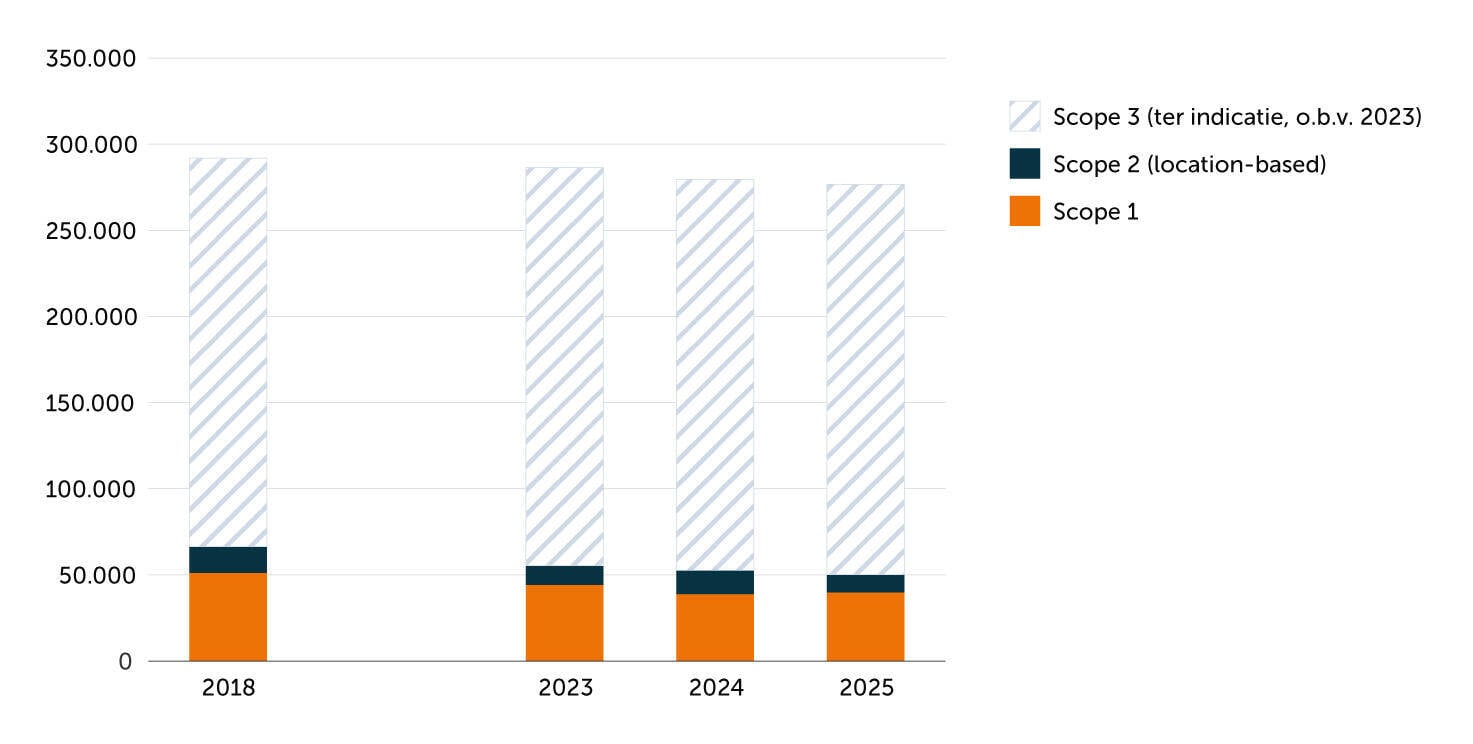
Graph 1. Greenhouse gas emissions [by tonnes of CO2 equivalent].
Heat and cooling production
Table 1. Energy consumption and production [MWh]
Electricity generation
From renewable sources:
Elektriciteitsopwekking
MWh
Energy consumption
From fossil fuels:
Of which cooling
13.261
Of which gas oil
1.515
Of which natural gas
194.939
Of which purchased electricity
44.769
Of which cooling from natural gas
36.566
Of which heat from natural gas
98.013
From fossil fuels:
Of which from gas oil
1.531
Of which from natural gas
57.907
From fossil fuels:
Of which from solar panels
632
Uit hernieuwbare bronnen:
Of which self-generated solar power
632
From renewable sources:
Graph 2. Quantities of waste [in tonnes] and processing
Water and medicines
Sustainable use of medicines and reducing medicine residues in wastewater are key focus areas. In 2025, we concentrated on raising awareness and changing behaviour. Medication waste has been reduced through digitisation, clustering preparations, just-in-time immunotherapy and reusing vials containing hazardous medicines.
Nutrition and health
Our aim is to provide a health-promoting and sustainable environment. For the food options available to staff and visitors, this means 80% healthy (in 2024: 24% healthy) and ≥60% plant-based protein by 2030 (in 2024: 53%). We used a staff consultation in 2025 to consider how best to achieve this (to be published in 2026) and the first long-term steps to that end were taken. Bicycle hire schemes have been made available for travel between the two sites. Assistants in nutrition have been trained and initial adjustments have been made to the hospital menu to make food for patients more sustainable as well.
Societal impact
Sustainability and planetary health are becoming ever more firmly embedded in research and education, particularly within medicine degree programmes (BSc and MSc). Curriculum assessments have been carried out with students in order to integrate sustainability permanently into all advanced programmes. We tightened up and laid down our ambitions within research in 2025, producing a position paper on sustainability in research (to be published in 2026).
Supplementary sustainability table 1
Supplementary sustainability table 2