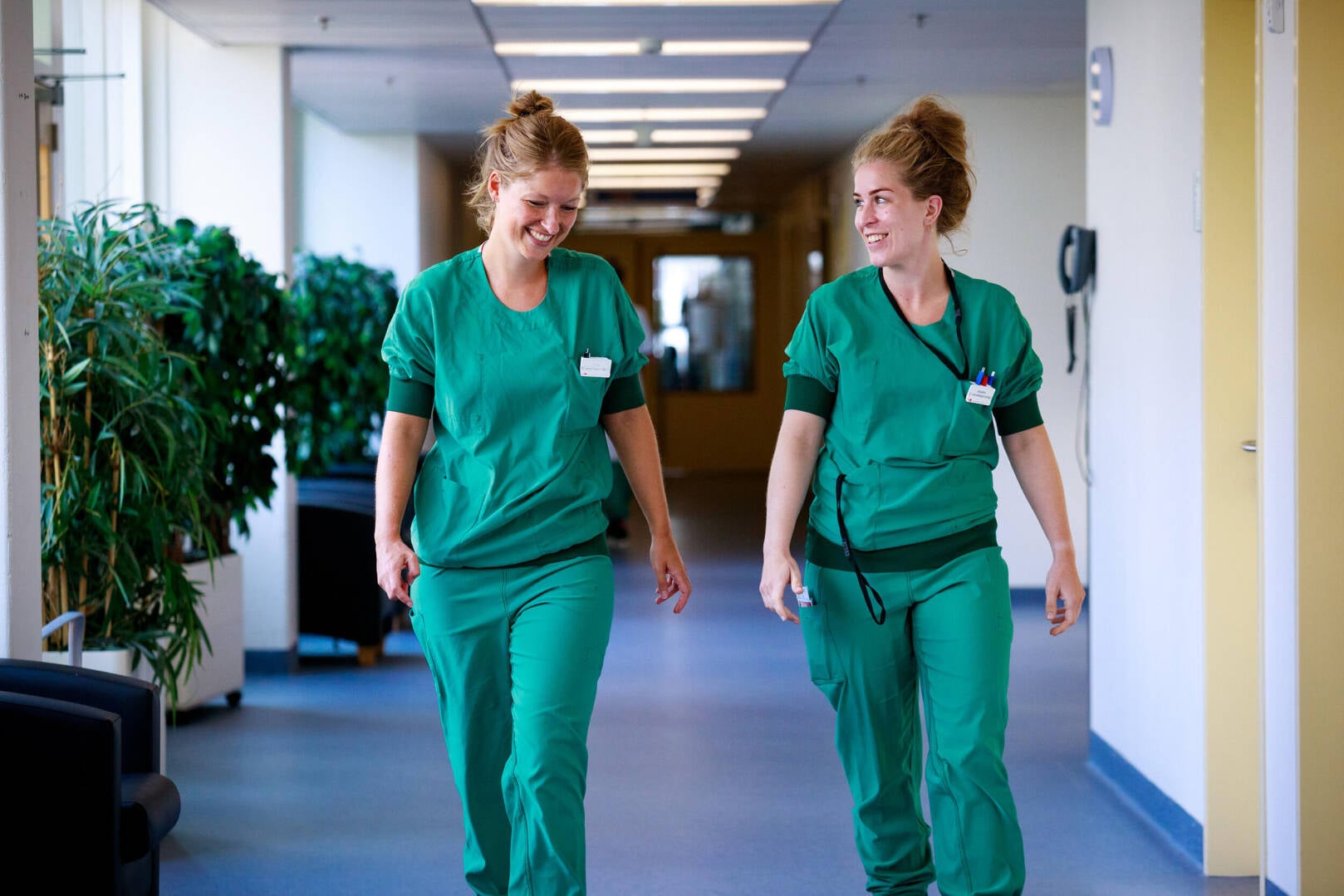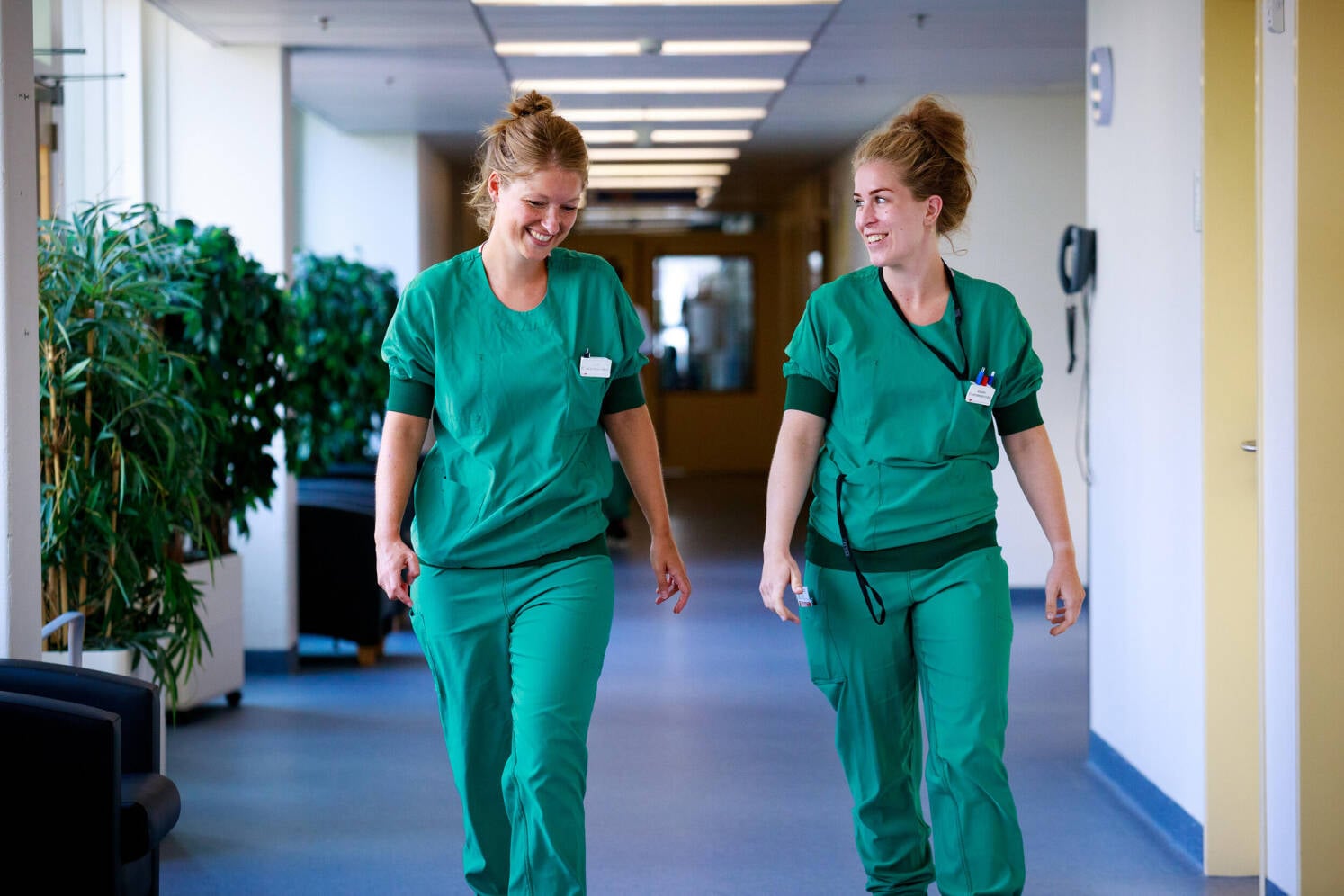
Healthcare in the Netherlands is facing significant challenges, including a scarcity of resources and staff. A move towards appropriate healthcare is essential if we are to keep the Dutch healthcare system accessible, affordable and of high quality in the future. Appropriate healthcare means care that is tailored as closely as possible to patients’ needs and wishes. This is healthcare that has been proven to be effective, is used efficiently and helps to maintain health and quality of life. At the same time, the resources that are available should be used carefully and attention paid to the wellbeing and employability of healthcare professionals.
The specific ways in which Amsterdam UMC puts this into practice include actively involving patients and their relatives in improving healthcare, making the best use of available capacity and investing in nurses’ job satisfaction and their participation in decision-making.

Patients as partners
Amsterdam UMC actively involves patients and their relatives in improving and modernising healthcare. Various initiatives aimed at putting the perspectives and needs of patients centre stage were implemented in 2025:
Using the initiatives mentioned above, we aim to maximise our patients’ involvement in shaping healthcare together and, where possible, improving it.
Quality of care
Amsterdam UMC maintains a continuous focus on delivering safe and high-quality care and making lasting improvements in quality.
We once again received international accreditation from the Joint Commission International (JCI) in 2025. This quality mark confirms that quality and patient safety within Amsterdam UMC satisfy international standards. The JCI auditors commended the professional standards, openness and cooperation within the organisation. Amsterdam UMC was informed of just a few areas requiring improvement, underlying the high quality of its healthcare and processes. This result would not have been possible without the daily efforts of all staff involved. The accreditation is not only a source of pride, but also marks the beginning of a new phase of continuous improvement. Amsterdam UMC remains committed to improving quality and patient safety, including through periodic external assessment and the implementation of internal improvement cycles.
A central digital module for the recording and monitoring of improvement measures following incidents was introduced in 2025. This module allows for hospital-wide insight into ongoing and completed improvement actions, promotes transparency and collaboration, and encourages the sharing of good examples between departments. Staff can easily which improvements have been implemented elsewhere and apply them within their own teams.
The introduction of an admission summary in electronic patient records is an important innovation. This digital tool provides healthcare professionals with a full and up-to-date overview of the medical care provided during an admission at a glance. This facilitates transfers between practitioners, reduces the administrative burden and lowers the risk of errors. The admission summary is now being used in all clinical departments and experiences have been very positive: healthcare professionals are informed more quickly and can get straight down to work after shift changes.
Nurses' job satisfaction and participation in decision-making
Amsterdam UMC invests in its nurses’ job satisfaction and participation in decision-making through various initiatives:
Patiënt als partner
Amsterdam UMC betrekt patiënten en hun naasten actief bij het verbeteren en vernieuwen van de zorg. In 2025 zijn diverse initiatieven uitgevoerd om het perspectief en de behoeften van patiënten centraal te stellen:
Meer dan 55.000 patiënten deelden hun ervaringen via de Patiëntervaringsmonitor (PEM). De zorg werd gemiddeld gewaardeerd met een 8,7. Daarnaast ontvingen de umc’s gezamenlijk de Picker Experience Network (PEN) Award voor hun aanpak om patiëntervaringen te verzamelen en te benutten voor verbetering.
Het online Patiëntenpanel, met ruim 800 leden, is negen keer geraadpleegd over ontwikkelingen binnen Amsterdam UMC, onder andere via vragenlijsten, groepsgesprekken en interviews.
In het kader van digitale innovatie is ingespeeld op de wens van patiënten om meer regie te hebben over hun eigen zorgproces. Bij steeds meer poliklinieken kunnen patiënten zelf afspraken inplannen. Op enkele klinische afdelingen hebben patiënten tijdens hun opname toegang tot hun zorggegevens via het patiëntenportaal ‘Mijn Dossier’. Met het programma ‘Ziekenhuis Thuis’ kunnen patiënten, waar mogelijk, thuis herstellen met ondersteuning van het ziekenhuis. Deze initiatieven dragen bij aan meer eigen regie en betrokkenheid van de patiënt.
Om bewustwording te creëren over gezondheidsvaardigheden, hebben 182 medewerkers deelgenomen aan de Escaperoom Laaggeletterdheid, waarin zij ervaren hoe complex informatie kan zijn voor mensen die moeite hebben met lezen en schrijven. Om informatie toegankelijker te maken is, met behulp van de AI-assistent ‘Begrijpelijke taal’, gestart met het herschrijven van patiëntenfolders naar eenvoudigere taal. Een taalambassadeur, met ervaring met laaggeletterdheid, heeft de begrijpelijkheid van patiënteninformatie op twee afdelingen getest.
De VR-film “Door de ogen van de patiënt” is in 50 workshops getoond en besproken. Uit onderzoek blijkt dat deze ervaring het empathisch vermogen van medewerkers vergroot en leidt tot aanpassing van gedrag in de praktijk.
Met bovenstaande initiatieven willen we onze patiënten optimaal betrekken om de zorg samen vorm te geven en waar mogelijk te verbeteren.

Capacity
Amsterdam UMC made significant steps in 2025 towards optimising healthcare capacity, the aim being to make healthcare processes more efficient, and ensure better use of resources and more job satisfaction for healthcare professionals.
The Central Capacity Management Body (CROC) plays a central role in hospital-wide capacity management. Various initiatives and projects have resulted in more efficient use of scarce capacity. For instance, a blueprint for the Emma Children’s Hospital meant that 150 additional operations could be performed. The Tactical Capacity Consultations (TCOs) and the operational ‘Keek op de Week’ meetings have improved collaboration between departments and parts of the chain and a smoother planning process, allow an additional 1,000 operations to be carried out each year. The OT waiting lists project has also reduced the waiting list by 30%, and the number of patients who have been on the waiting list for more than two years has fallen sharply.
The ‘Focusing on discharge with an Expected Discharge Date (VOD)’ project, which is aimed at ensuring a predictable and efficient discharge process, is another centrepiece. Through multidisciplinary collaboration in discharge teams, we are working on interventions to improve the discharge process. The use of the VOD dashboard, which quickly shows how accurately the expected discharge date has been predicted, is one such intervention. Determining and recording those dates through multidisciplinary collaboration is creating greater predictability in the discharge process. This allows timely aftercare, transport and other practical arrangements to be made, improving both patient satisfaction and bed occupancy rates.
The central pre-admission clinic was opened last year, the aim being to prepare patients more efficiently and effectively for their operations, admission and discharge. Combined appointments involving the medication team, the nurse, the anaesthetist and, if necessary, the transfer nurse, avoids duplication of work and gives both patients and staff more control, peace of mind and understanding of the process. The nurses at the pre-admission clinic take patients’ medical history in advance and identify any problems in good time, meaning that their colleagues are better prepared on the day of admission and that patients are better informed. Twelve of the
eighteen surgical specialisms now work with the pre-admission clinic, making for more efficient collaboration, shorter admission times and better use of capacity at Amsterdam UMC.
Lorem ipsum dolor sit amet, consectetur adipiscing elit. Fusce sollicitudin dapibus dolor, nec interdum risus iaculis lobortis. Vivamus venenatis dapibus nisi vel mattis. Nunc at tellus venenatis, sagittis ligula non, viverra nisi. Suspendisse vitae ullamcorper risus. Integer feugiat orci maximus est cursus, ac volutpat nunc condimentum. Etiam tempor felis odio, vel convallis diam fermentum sed.
Sed ac nulla est. Proin dictum diam at turpis eleifend porttitor. Morbi vel orci vitae est fermentum sodales ac ut augue. In tincidunt consequat erat, vel facilisis sem maximus venenatis. Phasellus vulputate magna ac magna pellentesque porta. Aenean ut lectus aliquet, gravida tortor nec, varius sapien. Suspendisse molestie turpis feugiat posuere dapibus. Mauris neque augue, fermentum in tortor vel, rutrum placerat ante. In fermentum a libero nec molestie.
Lorem ipsum dolor sit amet, consectetur adipiscing elit. Fusce sollicitudin dapibus dolor, nec interdum risus iaculis lobortis. Vivamus venenatis dapibus nisi vel mattis. Nunc at tellus venenatis, sagittis ligula non, viverra nisi. Suspendisse vitae ullamcorper risus. Integer feugiat orci maximus est cursus, ac volutpat nunc condimentum. Etiam tempor felis odio, vel convallis diam fermentum sed.
Lorem ipsum dolor sit amet, consectetur adipiscing elit. Fusce sollicitudin dapibus dolor, nec interdum risus iaculis lobortis. Vivamus venenatis dapibus nisi vel mattis. Nunc at tellus venenatis, sagittis ligula non, viverra nisi.