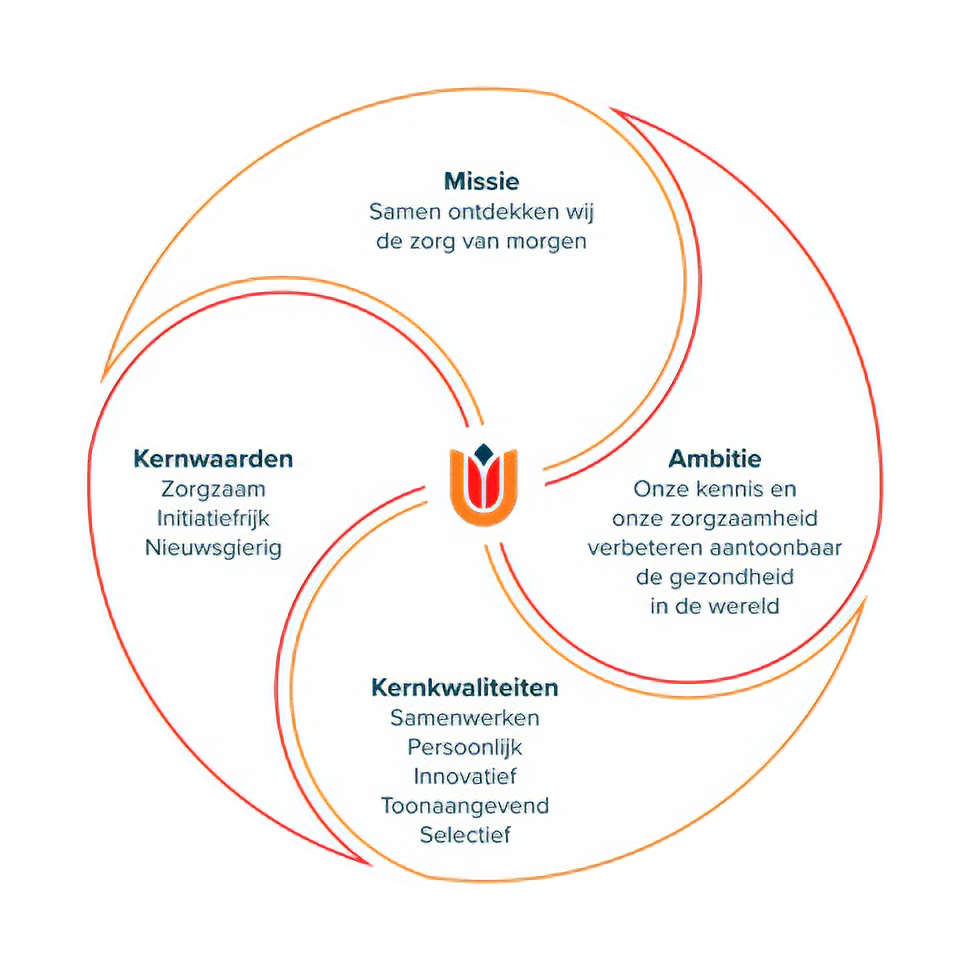
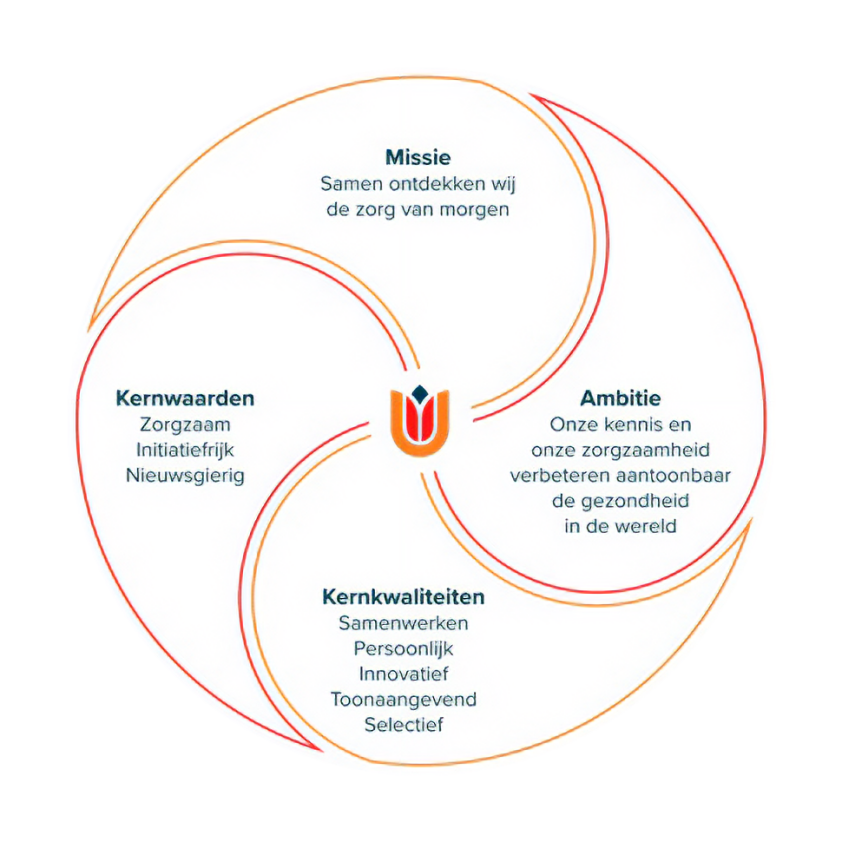
We are all familiar with our core values: Caring, Taking Initiative, Inquiring. But how are those values expressed in practice? Have we really succeeded in embedding the ambitions of our 2021–2025 strategy within the organisation? We asked our younger and newer colleagues about their experience of Amsterdam UMC.
our strength


‘Comprehensive support for research and development’
‘The strength of Amsterdam UMC lies in combining the expertise and funds from what used to be two university hospitals, as well as in the broad spectrum of medical and biomedical specialisms and interdisciplinary exchange. This diversity and the comprehensive collaboration both within and outside the hospital, both in the Netherlands and internationally, create a stimulating working environment. And that is without even considering the strategic location in a diverse, international city, where you attract new talent and offer a global perspective.
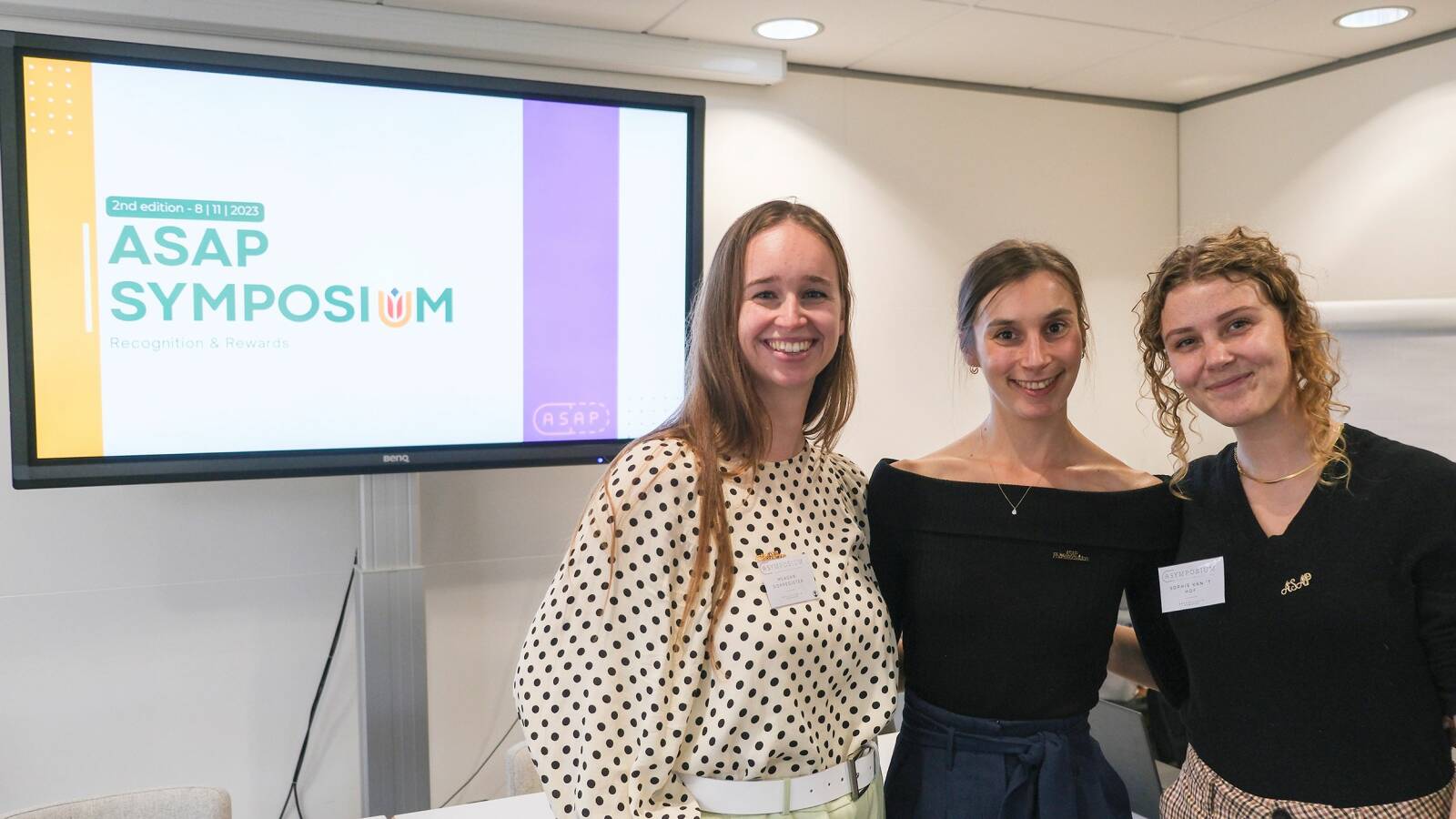
Amsterdam UMC is a major employer for doctoral candidates in the Netherlands, offering extraordinary opportunities. These PhD students can count on comprehensive support in their research and academic development, for instance when applying for grants. The research institutions regularly organise events to help grow networks.
‘The culture is quite informal, which promotes collaboration and innovation.’
There is still room for improvement in terms of strengthening collaboration with other departments, research projects and individual researchers. We also see opportunities in the strategic and ethical integration of AI into healthcare, more AI-focused research and collaboration with AI experts.
As an employer, Amsterdam UMC could prioritise employees’ mental health more and help build a culture that respects their work/life balance. More flexible PhD programmes could make the organisation even more attractive as an employer.’
- Association of Amsterdam UMC PhD Candidates (ASAP)
‘Together, we explore the care of the future’
‘The combination of patient care, education and research is unique among academic centres, and it is priceless. It’s the diversity of knowledge and expertise that we have – and are still developing – in all these fields: that is the strength of Amsterdam UMC. These insights lead to practical applications for society too, so we also make a real social impact. And we are training the care professionals of the coming decades. That’s how we are shaping the care of the future.
All of us – all 19,500 smart, motivated people – have a contribution to make. Everyone at the clinic is really approachable and we try to avoid strict hierarchies. Direct communication means that everyone is in the loop. The medical school also focuses strongly on this area.
'When we improve multidisciplinary collaboration and look beyond individual domains, we are on top of the world.’
The diversity among our staff sets us apart from other university centres, although we realise that even we still have a long way to go in this area. We see room for improvement in the better integration of our core duties. We need to convert practical knowledge and expertise into research and education; developments in education need to be translated into support for research and practical duties; and research findings need to be given practical applications. When we improve multidisciplinary collaboration and look beyond individual domains, we are on top of the world. All this demands a culture where it’s OK to fail, a supportive climate for innovation. We would also like to see funds made available for other important topics: mental health, sustainability and diversity.’
- Kevin van den Berg, Young Amsterdam UMC

our strength


January 2024 | © Amsterdam UMC 2024

‘Together, we explore the care of the future’
‘The combination of patient care, education and research is unique among academic centres, and it is priceless. It’s the diversity of knowledge and expertise that we have – and are still developing – in all these fields: that is the strength of Amsterdam UMC. These insights lead to practical applications for society too, so we also make a real social impact. And we are training the care professionals of the coming decades. That’s how we are shaping the care of the future.
All of us – all 19,500 smart, motivated people – have a contribution to make. Everyone at the clinic is really approachable and we try to avoid strict hierarchies. Direct communication means that everyone is in the loop. The medical school also focuses strongly on this area.
'When we improve multidisciplinary collaboration and look beyond individual domains, we are on top of the world.’
The diversity among our staff sets us apart from other university centres, although we realise that even we still have a long way to go in this area. We see room for improvement in the better integration of our core duties. We need to convert practical knowledge and expertise into research and education; developments in education need to be translated into support for research and practical duties; and research findings need to be given practical applications. When we improve multidisciplinary collaboration and look beyond individual domains, we are on top of the world. All this demands a culture where it’s OK to fail, a supportive climate for innovation. We would also like to see funds made available for other important topics: mental health, sustainability and diversity.’
- Kevin van den Berg, Young Amsterdam UMC
‘Comprehensive support for research and development’
‘The strength of Amsterdam UMC lies in combining the expertise and funds from what used to be two university hospitals, as well as in the broad spectrum of medical and biomedical specialisms and interdisciplinary exchange. This diversity and the comprehensive collaboration both within and outside the hospital, both in the Netherlands and internationally, create a stimulating working environment. And that is without even considering the strategic location in a diverse, international city, where you attract new talent and offer a global perspective.
Amsterdam UMC is a major employer for doctoral candidates in the Netherlands, offering extraordinary opportunities. These PhD students can count on comprehensive support in their research and academic development, for instance when applying for grants. The research institutions regularly organise events to help grow networks.
‘The culture is quite informal, which promotes collaboration and innovation.’
There is still room for improvement in terms of strengthening collaboration with other departments, research projects and individual researchers. We also see opportunities in the strategic and ethical integration of AI into healthcare, more AI-focused research and collaboration with AI experts.
As an employer, Amsterdam UMC could prioritise employees’ mental health more and help build a culture that respects their work/life balance. More flexible PhD programmes could make the organisation even more attractive as an employer.’
- Association of Amsterdam UMC PhD Candidates (ASAP)
We are all familiar with our core values: Caring, Taking Initiative, Inquiring. But how are those values expressed in practice? Have we really succeeded in embedding the ambitions of our 2021–2025 strategy within the organisation? We asked our younger and newer colleagues about their experience of Amsterdam UMC.