
The world around us:
an evolving landscape
Our UMC needs to make essential choices. And those choices exist not in a vacuum, but within the world around us. Society is demanding more care, at a time when there are fewer and fewer providers of that care. Patients, government, care partners and insurers need to know where we stand. What’s more, digitisation and sustainability are becoming ever more important. All these elements contribute to the landscape that sets the boundaries for what we can do in the coming years.



The demand for care is increasing. Care is under pressure, partly due to increasing numbers of older people and people with multiple medical conditions. The cost of healthcare is set to triple by 2060 if nothing is done.

At the same time, staff shortages and heavy workloads are becoming more acute in healthcare. Because we understand that Amsterdam UMC cannot escape the serious impact of labour market shortages, we are shifting to new ways of working and teaching, including digitisation and smart healthcare innovations. We want to be an attractive employer, and we want to foster and inspire motivated employees.
The Integrated Care Agreement
(Integraal Zorgakkoord, IZA, 2022)
sets out agreements on ‘appropriate care’ between all bodies that are involved in the Dutch healthcare sector, including the UMCs. The IZA aims to ensure that high-quality care is available and affordable for everyone, both now and in the future. The practical implementation of this agreement will form a key part of the landscape in which we operate in the coming years.

We need to reflect on questions such as: what care matches our profile? In which fields do we want to excel, what will we organise in the region, and what kinds of care will we decide not to offer? We already have the Kleur Bekennen (‘show your colours’) programme to help us create the care portfolio of the future at Amsterdam UMC.

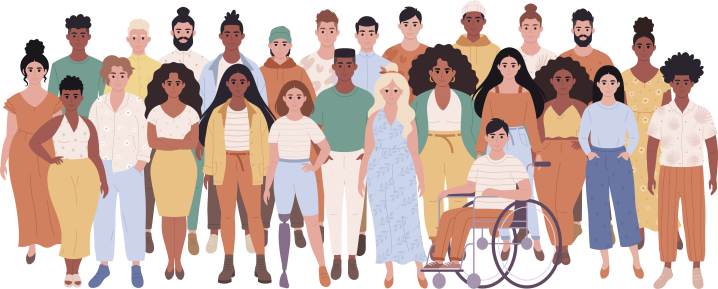
Prevention and reducing health disparities represent key social challenges for the coming years, and we want to play an integral part in tackling those challenges. We can’t do that alone, and we are actively seeking to collaborate with the organisations around us.
We want to share our expertise and research findings more widely throughout our networks, so ordinary people can benefit from them and so we can add social and economic value in the wider community.


That’s why we are increasingly organising and directing care, research, education and training in coordination with other providers at a regional, national and international level.

A new vision for doctors’ and nurses’ training is emerging as a result of the changes in the care landscape. There is a greater emphasis on learning both within and outside the hospital itself, on data-driven education with digital support, and on prevention and care in the community.
We see a similar shift in research: more emphasis on prevention, on data-driven innovation and on adding value for society.
Sustainability is the guiding principle in all our plans and in everything we do. When we signed the Green Deal for Sustainable Care 3.0, we knew we were committing to achieving ambitious goals. Many employees are already actively working to increase sustainability in practice. The Green Care Community has grown into a network of more than 50 Green Teams, and Amsterdam UMC has impressive credentials when it comes to scientific research into green, sustainable healthcare.



January 2024 | © Amsterdam UMC 2024

The world around us:
an evolving landscape

Our UMC needs to make essential choices. And those choices exist not in a vacuum, but within the world around us. Society is demanding more care, at a time when there are fewer and fewer providers of that care. Patients, government, care partners and insurers need to know where we stand. What’s more, digitisation and sustainability are becoming ever more important. All these elements contribute to the landscape that sets the boundaries for what we can do in the coming years.

The demand for care is increasing. Care is under pressure, partly due to increasing numbers of older people and people with multiple medical conditions. The cost of healthcare is set to triple by 2060 if nothing is done.

At the same time, staff shortages and heavy workloads are becoming more acute in healthcare. Because we understand that Amsterdam UMC cannot escape the serious impact of labour market shortages, we are shifting to new ways of working and teaching, including digitisation and smart healthcare innovations. We want to be an attractive employer, and we want to foster and inspire motivated employees.
The Integrated Care Agreement
(Integraal Zorgakkoord, IZA, 2022)
sets out agreements on ‘appropriate care’ between all bodies that are involved in the Dutch healthcare sector, including the UMCs. The IZA aims to ensure that high-quality care is available and affordable for everyone, both now and in the future. The practical implementation of this agreement will form a key part of the landscape in which we operate in the coming years.

We need to reflect on questions such as: what care matches our profile? In which fields do we want to excel, what will we organise in the region, and what kinds of care will we decide not to offer? We already have the Kleur Bekennen (‘show your colours’) programme to help us create the care portfolio of the future at Amsterdam UMC.

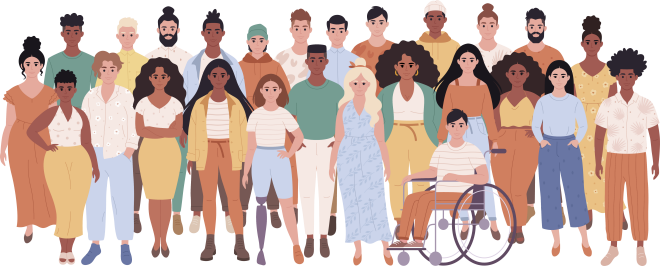
Prevention and reducing health disparities represent key social challenges for the coming years, and we want to play an integral part in tackling those challenges. We can’t do that alone, and we are actively seeking to collaborate with the organisations around us.
We want to share our expertise and research findings more widely throughout our networks, so ordinary people can benefit from them and so we can add social and economic value in the wider community.

That’s why we are increasingly organising and directing care, research, education and training in coordination with other providers at a regional, national and international level.

A new vision for doctors’
and nurses’ training is
emerging as a result of the
changes in the care landscape. There is a greater emphasis on learning both within and outside the hospital itself, on data-driven education with digital support, and on prevention and care in the community.
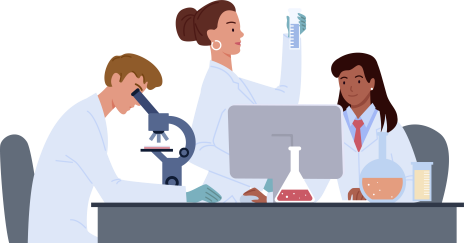
We see a similar shift in research: more emphasis on prevention, on data-driven innovation and on adding value for society.

Sustainability is the guiding principle in all our plans and in everything we do. When we signed the Green Deal for Sustainable Care 3.0, we knew we were committing to achieving ambitious goals. Many employees are already actively working to increase sustainability in practice. The Green Care Community has grown into a network of more than 50 Green Teams, and Amsterdam UMC has impressive credentials when it comes to scientific research into green, sustainable healthcare.