
because it’s also about you”
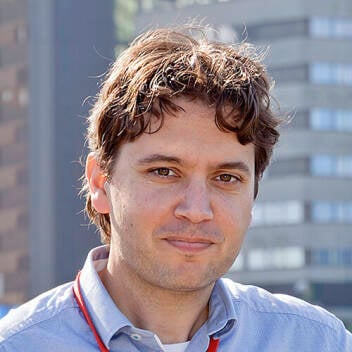
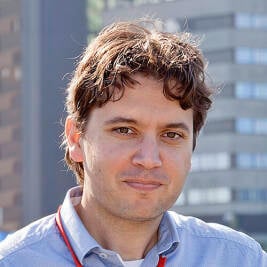
Morgan Shehata
housing and energy expert
“I see many changes coming our way. We now have the opportunity to discuss what that will mean for our work, out of both professional and personal interest. When my manager asked me to join the sessions on AI, I immediately said yes. I hope my colleagues realise that our involvement is crucial to the development of the organisation. The work we do is going to change. The best way to deal with that is to be curious about what that change will entail.”
“What if you could build a hospital without having to take into account what’s already there, focusing purely on our current knowledge and technological capabilities? That’s exactly what they did in Dubai. After hearing about this in one of the TrendTalks, we started thinking: what can we learn from this?
“Our involvement is crucial
to the development of the organisation”
What if the care process didn’t start at the doctor’s office, but at home in the patient’s living room? What if care wasn’t provided linearly, from first-line to third-line care, but as a wheel with the UMC in the middle? We’ll have to change the way we work, and we’re going to have to make choices: what do we want to do? What don’t we want to do? What role do we want to play in relation to other care organisations?”
“This also has implications for housing and energy. As we deliver more care outside the hospital and work more from home, less floor space is needed. Meanwhile, the infrastructure for managing all our data traffic is becoming more important. These are decades-long change processes, so we have to think about what our long-term goals are. Digital technology can already do a lot, but we’re still human: making things our own requires time and adaptability. The trick is to get everyone on board with this process, from cleaners to surgeons.”
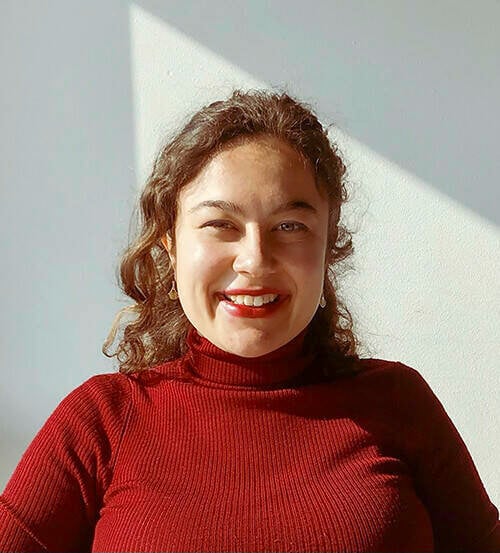
“This is a special moment: with the merger behind us, we have a chance to chart a new course. As an aspiring doctor and researcher, I look at things from the point of view of future employees, because it’s important that we appeal to the next generations. How can we future-proof Amsterdam UMC and our working environment, research and education?
As a researcher, I’m concerned with our impact on society and public health. We’re a teaching hospital in Amsterdam. At the same time, we play a role in various ecosystems, large and small: in the neighbourhood, in the Netherlands, but also in and outside Europe, both in healthcare innovation and care delivery. How can we take a socially responsible position in all these areas? How will we ensure that the medicines and vaccines we develop in our hospital are affordable and available to all – including in the Global South?
Because of my interest in these areas, I participated as a panellist in the TrendTalk on Planetary Health and the expert sessions on Prevention, Health Inequalities and Appropriate Care. What struck me about these discussions is that people of my generation are much more aware of climate change in their daily lives, also in their role as future healthcare professionals. Good health starts outside the hospital. Our targets for addressing environmental issues and health inequalities are often more ambitious than the hospital’s current goals. That’s why I want to focus on shaping a socially responsible future for the hospital.”
- Sarai Keestra, PhD candidate in Epidemiology & Paediatrics
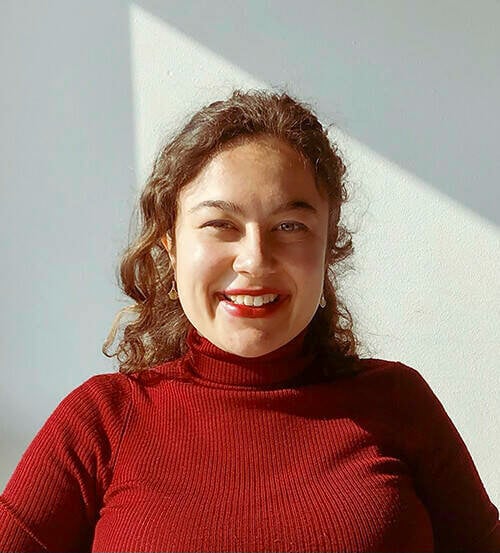
“Turnover is high, and recruiting new nursing staff is a challenge. How do we keep people engaged? What makes them want to stay, and what do they need to feel comfortable in their jobs? We really need to reinforce our nursing staff if we want to continue providing good care in the future.
We don’t yet have a care network that ensures that vulnerable patients get the right care in the right place, and our healthcare system isn’t funded in a way that facilitates this. But for our patients, the people I get out of bed for every day, it’s very important that we tackle this issue.”
– Natascha de Ruiter, nursing consultant, in DNA magazine.
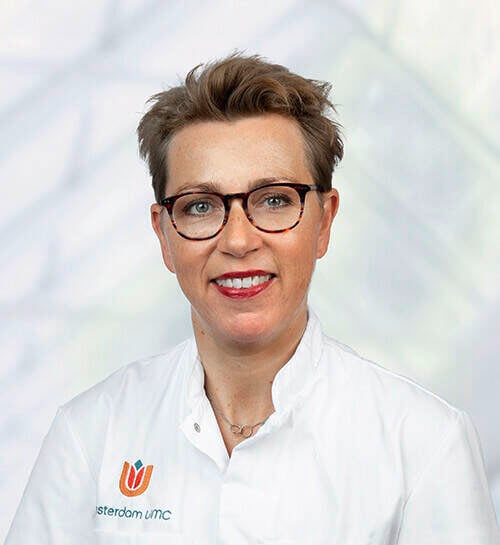
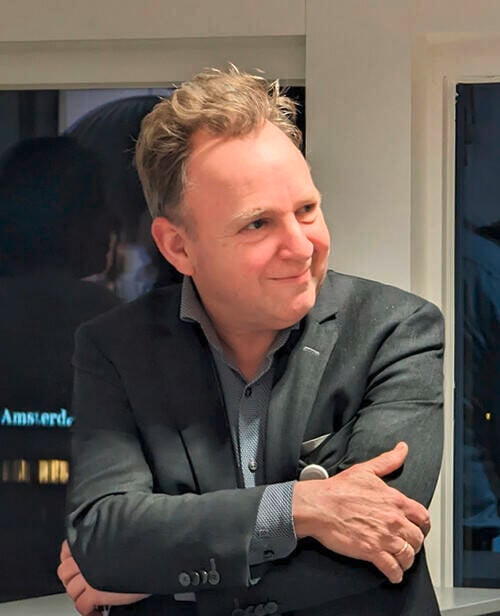
It’s also important to remember that construction and renovation are slow processes: the things we come up with today will take five years to complete. So we want to provide a long-term perspective, which is relevant to almost every trend that is being discussed in the strategy development process, like sustainability, but also regional cooperation and digitalisation. Treating more patients remotely means we need less space, but we can also choose to make that space available to partners, including regional healthcare partners. To strengthen the labour market, we could consider training medical technicians in cooperation with educational institutions. We need a lot more people, while vocational students can benefit from our specialised knowledge and gain experience here. This would also give us a chance to inspire them to come and work here early on.” - Emile Spek, managing director of Housing, Property and Technology
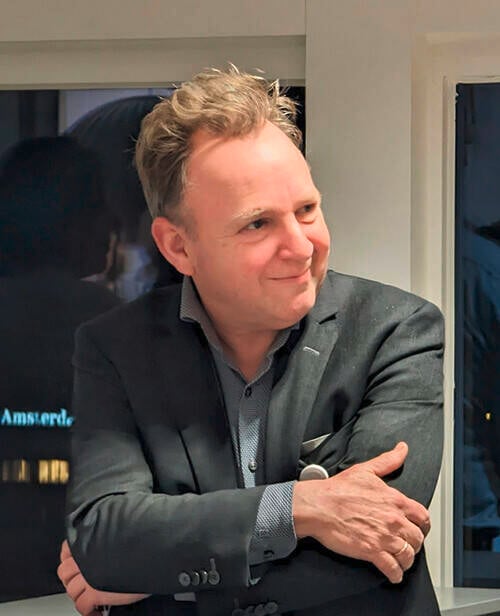
“As an employee of Amsterdam UMC, I’m very excited about how this strategy is being developed: we’re really looking at things from an outside perspective instead of just thinking about ourselves. That’s not something I’ve experienced before in a large organisation. My colleagues and I are specifically looking at how buildings and technology can support and facilitate the new strategy once it’s implemented. The investments we make in these areas put a heavy strain on the organisation’s finances. That’s why we want to be involved and provide advice at an early stage, so that we make the right investments for the future.
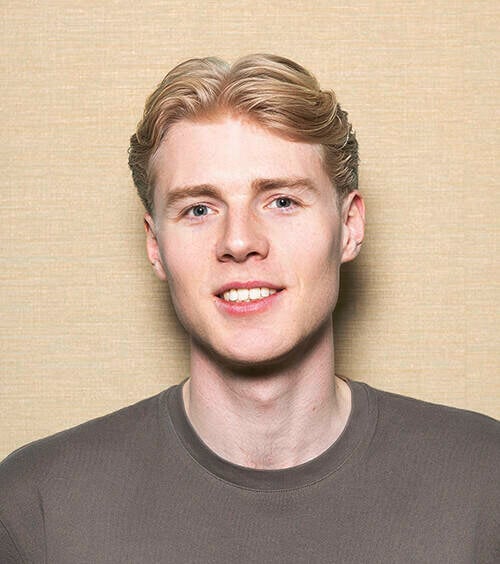
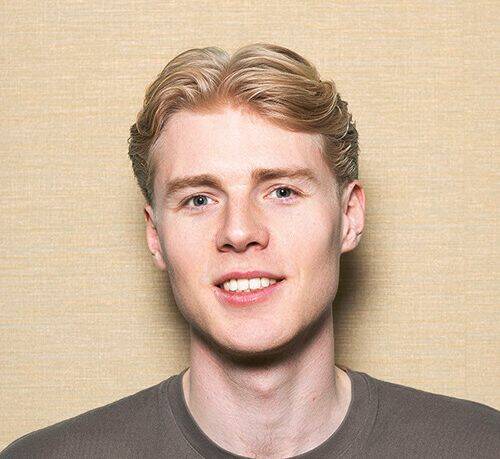
“Some of the strategy’s focus areas touch directly on my work. When it comes to sustainability, for example, it’s all about personalised medication – that’s how you minimise overprescribing. But sustainability also plays a role in how we travel to the hospital: do you come here by public transport, car or bike? AI is already playing a major role in my work. I use it to recognise patterns, for example. It will be interesting to see how this technology develops.” - Sjoerd Koopman, PhD candidate in Biomedical Sciences and board member of Jong Amsterdam UMC, DNA magazine.
because it’s also about you”
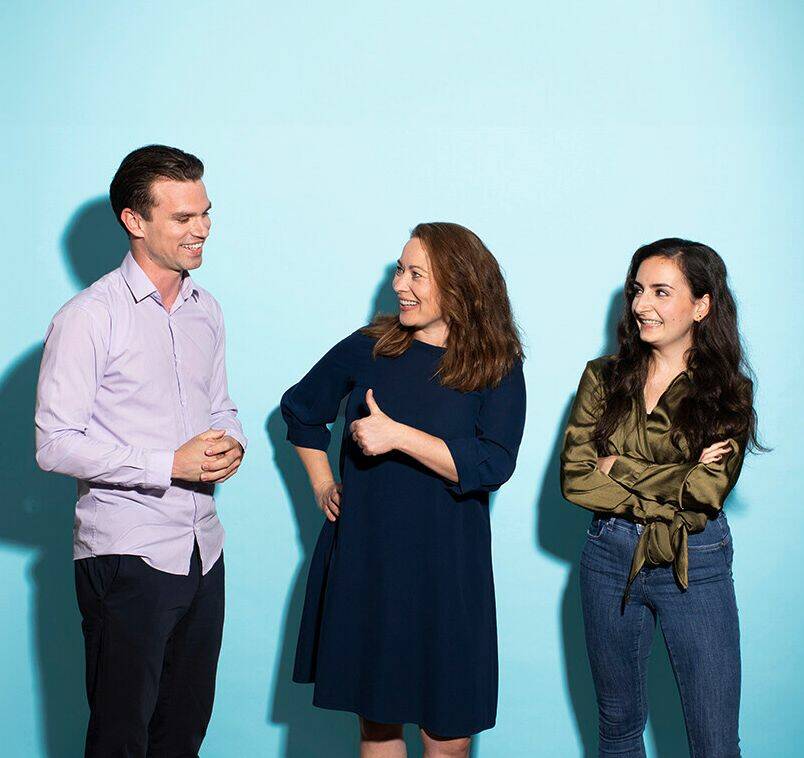
Morgan Shehata
housing and energy expert
“I see many changes coming our way. We now have the opportunity to discuss what that will mean for our work, out of both professional and personal interest. When my manager asked me to join the sessions on AI, I immediately said yes. I hope my colleagues realise that our involvement is crucial to the development of the organisation. The work we do is going to change. The best way to deal with that is to be curious about what that change will entail.”
“What if you could build a hospital without having to take into account what’s already there, focusing purely on our current knowledge and technological capabilities? That’s exactly what they did in Dubai. After hearing about this in one of the TrendTalks, we started thinking: what can we learn from this?
“Our involvement is crucial to the development of the organisation”
What if the care process didn’t start at the doctor’s office, but at home in the patient’s living room? What if care wasn’t provided linearly, from first-line to third-line care, but as a wheel with the UMC in the middle? We’ll have to change the way we work, and we’re going to have to make choices: what do we want to do? What don’t we want to do? What role do we want to play in relation to other care organisations?”
“This also has implications for housing and energy. As we deliver more care outside the hospital and work more from home, less floor space is needed. Meanwhile, the infrastructure for managing all our data traffic is becoming more important. These are decades-long change processes, so we have to think about what our long-term goals are. Digital technology can already do a lot, but we’re still human: making things our own requires time and adaptability. The trick is to get everyone on board with this process, from cleaners to surgeons.”
“Some of the strategy’s focus areas touch directly on my work. When it comes to sustainability, for example, it’s all about personalised medication – that’s how you minimise overprescribing. But sustainability also plays a role in how we travel to the hospital: do you come here by public transport, car or bike? AI is already playing a major role in my work. I use it to recognise patterns, for example. It will be interesting to see how this technology develops.” - Sjoerd Koopman, PhD candidate in Biomedical Sciences and board member of Jong Amsterdam UMC, DNA magazine.
“This is a special moment: with the merger behind us, we have a chance to chart a new course. As an aspiring doctor and researcher, I look at things from the point of view of future employees, because it’s important that we appeal to the next generations. How can we future-proof Amsterdam UMC and our working environment, research and education?
As a researcher, I’m concerned with our impact on society and public health. We’re a teaching hospital in Amsterdam. At the same time, we play a role in various ecosystems, large and small: in the neighbourhood, in the Netherlands, but also in and outside Europe, both in healthcare innovation and care delivery. How can we take a socially responsible position in all these areas? How will we ensure that the medicines and vaccines we develop in our hospital are affordable and available to all – including in the Global South?
Because of my interest in these areas, I participated as a panellist in the TrendTalk on Planetary Health and the expert sessions on Prevention, Health Inequalities and Appropriate Care. What struck me about these discussions is that people of my generation are much more aware of climate change in their daily lives, also in their role as future healthcare professionals. Good health starts outside the hospital. Our targets for addressing environmental issues and health inequalities are often more ambitious than the hospital’s current goals. That’s why I want to focus on shaping a socially responsible future for the hospital.”
- Sarai Keestra, PhD candidate in Epidemiology & Paediatrics
“Turnover is high, and recruiting new nursing staff is a challenge. How do we keep people engaged? What makes them want to stay, and what do they need to feel comfortable in their jobs? We really need to reinforce our nursing staff if we want to continue providing good care in the future.
We don’t yet have a care network that ensures that vulnerable patients get the right care in the right place, and our healthcare system isn’t funded in a way that facilitates this. But for our patients, the people I get out of bed for every day, it’s very important that we tackle this issue.”
– Natascha de Ruiter, nursing consultant, in DNA magazine.
It’s also important to remember that construction and renovation are slow processes: the things we come up with today will take five years to complete. So we want to provide a long-term perspective, which is relevant to almost every trend that is being discussed in the strategy development process, like sustainability, but also regional cooperation and digitalisation. Treating more patients remotely means we need less space, but we can also choose to make that space available to partners, including regional healthcare partners. To strengthen the labour market, we could consider training medical technicians in cooperation with educational institutions. We need a lot more people, while vocational students can benefit from our specialised knowledge and gain experience here. This would also give us a chance to inspire them to come and work here early on.” - Emile Spek, managing director of Housing, Property and Technology
“As an employee of Amsterdam UMC, I’m very excited about how this strategy is being developed: we’re really looking at things from an outside perspective instead of just thinking about ourselves. That’s not something I’ve experienced before in a large organisation. My colleagues and I are specifically looking at how buildings and technology can support and facilitate the new strategy once it’s implemented. The investments we make in these areas put a heavy strain on the organisation’s finances. That’s why we want to be involved and provide advice at an early stage, so that we make the right investments for the future.

© Amsterdam UMC 2024
